Wednesday, October 1, 2008

If you are following our blog, you probably are wondering how we are doing in the field.


Well women did a good job being
 prompt during the interview week. We were kidding with them saying that we are not working
 by the "hora chapina" and that
 we work on "gringo time". We started  at 8:00 am. on Thursday, Friday and we finished at 11:30 on Saturday with the diagnostic or poverty assessment for the potential borrowers.
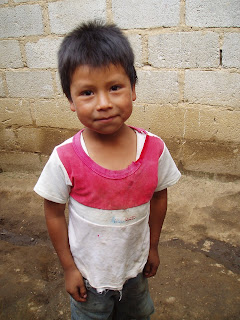


Most women told us "no se asusten de mi casa" (do not by shocked by my home). Many of these women felt embarrassed of their home. Of course, we told them that for us it is a privilege to be in their home. And yes it is definitely a real privilege for us to be in such humble and simple homes. Most of the houses are made of sheet-metal, wood or block. Half of the floors are made of dirt and many of these houses only have two rooms. All houses have old latrines. These women cook with wood and their house is filled by the smoke of "la lena" (wood). 

All women opened their doors to us with the hope that they are going to get something good for them and their family. These women desperately want money. 
First we interviewed a women with her husband, they were a very humble family. The husband talked with us, the wife said very little. The person who is charge in this family, definitely is the husband. We can understand that, he provides the daily support for the family and she takes care of the children and the house. In addition the culture here is that men make the decisions. We would like to work with this family and generate a business for the woman so she can start being empowered like her husband. We want to introduce something new in this culture. We are sure that we are doing this work with all our good willingness and heart.

We interviewed around thirsty-five women. Each case is different and similar in many ways. 
Many women who have a business do not have a clear idea of how much they are making or their profit. Other women would like to set up a business, but they do not know the cost of her 
 business, the marketing aspects of their business, or the client and
 competition. We explained to them that the business advisors are going to help to elaborate a complete business plan with these aspects. We use the simplest words to explain this role to them, and why we think that it is important for each borrower to have business advisor. We took time to go through their business's expenses and sales. We did this with the
 goal to make them realize that in many cases they are not making any profit. That they invest 600Q to make tortilla and 
they sell 600Q with no profit at all. We also realized that these women use their business to feed their children and this may count as their "ganancias" or their return, and they are satisfied if they at least can feed their children with the food that they are selling in their business. 

Doing this poverty assessment was hard because I had to tighten my heart and hold my tears because it is absolutely very sad to see so much poverty around us. I will never get used to see so much poverty, and we should not rest until everybody reaches a better standard of living, we are definitely blessed to have what we have and we should really do our best to help others to have a fairly living condition. Thank you for being part of Namaste's family working in many ways to reduce this poverty  and create a better reality for the most vulnerable. We know that it is possible and we only need to have the patience and perseverance to reduce poverty through one loan at time and many other social projects. Thank you for reading these blogs and being part of this army against poverty. 


Friday, August 22, 2008

Against the wind, raining and lightening…

August 20, 2008
…We had our meeting with San Mateo women at “Semillas de Amor y Esperanza” (Seeds of Love and Hope) center. Semillas de Amor y Esperanza is a small NGO that operates small community projects in San Mateo. Lyz, our leader and community facilitator, is the founder of this organization. This past Sunday, Lyz and I went to church to ask permission to publicize our program of credit and education in San Mateo during the mass. We also invited them to the meeting for this Tuesday. Twenty women and eight children came to the meeting. We had a lot to plan with the women. We started the meeting in Guatemala time, so we really were tight with time.

We presented to the women the idea of the business education and business advisor. We introduced this idea again because these initiatives of having a business advisor, as a mentor, in addition of business education and vocational training are foreign to them. We also explained that they have to pay a minimal amount for this. We made clear that Namaste will pay 370Q ($50) for each women to participate in the vocational training such as animal husbandry, textile design, etc and each women will pay 25Q ($3) for this service. In addition, Namaste will pay 500Q ($67) for having business education, mentorship and a personal business advisor for each woman; and that woman will need to pay 50Q ($7) for this service. Studies have shown that when people pay services or product then they value more whatever they are paying for. We want these women to feel that they own and “buy” these services. We also explained that we are doing this to see if having all these services and a loan can guarantee women success in their business. Moreover, these Q75 will have a money back guarantee. What this means is that if in the end of the cycle women would feel that it was not worth it to pay Q75 for these services, Namaste will reimburse their money. This policy will furthermore help Namaste to evaluate if the education part is worth it for the client and if the education business and mentorship was delivered effectively. Women were pleased that these services come with a guarantee.

After having explained this important piece, Jim, the program regional assistant, was introduced as the women’s business advisor. Jim explained with examples what he is going to do during this 6 month loan cycle and he asked permission to go their home to proceed with the baseline study and to do the feasibility study for each business this week. Then, we started asking women what are the best time and day that Jim and I can visit them. This part was a little bit hectic and funny as well, especially the part when we asked their addresses. Many women did not know their exact address. We asked them “Donde vives? (Where do you live?) Most of them answered, “Arriba en la loma en un callejon” (up in the hill on the alley). Finally, we founded solutions in how to get their home, and we will see if we actually could get to their home, we will tell you our adventure in finding our client’s home. As you remember, we are implementing the pilot program and we want to evaluate and monitor the progress and impact that the business education, mentorship, personal business advisors and credit have on the women’s businesses and the general social-economic situation. Therefore Namaste team has designed evaluation surveys that we will use to compare results with a control group. This control group will only have credit. San Mateo women are borrowers who are going to receive credit and business education; therefore, we will have three individual meeting at the borrower’s home to before FAPE disburses the credit.

Well, Jim and I will be in San Mateo doing the baseline and feasibility study in the next following weeks. We will be very busy but we will do our best to keep you informed through our blogs. Please do not hesitate to contact us at nelly@namaste-direct if you are eager to know how we are doing. We would love to hear from you.

Thursday, August 14, 2008

Moving forward!!!


August 13, 2008


Well, you probably are wondering what is happening with the project in San Mateo. As you probably remember from our past blog, this community has never before received credit. Microfinance Institutions (MFIs) in Guatemala call this type of community a "comunidad virgen" (virgin community). Namaste’s team and partners did a brief assessment to decide if this community could be the first region to launch the microfinance plus program. San Mateo will be part of the pilot program, so we are happy to announce this news to you and to the San Mateo women.


We were on our way to have our second meeting; the weather conditions were not that favorable. It was foggy, raining, and cold. Eighteen women and twelve children came to the meeting at the community center. We were surprised that so few women came to the meeting, when we had expected 100! Well today was "cut day". People call it "cut day" when it is time to cut vegetables in the mountains, so many people were in the campo (country side) doing farming work. You probably are saying, “Wow what a day to be outside cutting the vegetables!” but this is our borrowers' world and we can see how fortunate we are that someone is doing this to get our fresh vegetables to our tables.


Fundacion para la Asistencia de Pequena Empresa (FAPE) is an NGO. They are our partner and they work as a microfinance institution. FAPE has been working with micro entrepreneurs since 1984. FAPE is going to lead the meeting; they are going to handle the credit component of our pilot program in this region. FAPE delegated five local women to be in the pre-credit phase. These women have a lot of experience working with loans in the Guatemala communities. They were aware that many of the women are unable to read and write, so they brought drawings to explain the process, the requirements, the time, and the interest rate of a loan. The FAPE team started the meeting with a prayer. Most people are Catholic and we can see how they incorporate their beliefs in their professional practices.


The FAPE team explained the concepts well, but of course, many women still find this credit concept new. They have a lot of doubts, but they are also shy to directly ask all their questions. We know that women have a lot questions because they converse with Lyz, our community leader and facilitator. There were a few women who asked questions about the loan periods and the type of the business. We told them that the loan officers and the business advisors will work with them to create a business plan to guarantee success in their business. Many women want to raise pigs and it looks like this is a good business there. However, too many businesses like these could hurt them because we will help create too much competition. We decided that we are going to create new ideas for business and see what members of the community buy in Antigua, the near-by big city. This is Bob's idea and we think it is a good concept. Bob suggested that these women need to see internally what they need from outside of the community and create a business selling or doing what they get outside of their community. Transportation costs are becoming too high to buy most goods outside of your town. Therefore, we will work next Tuesday exclusively in this idea, so if you have any ideas that you would like to share with us for a business for our new clients, please write to me to nelly@namaste-direct.org. We definitely will share your ideas with them.


Lyz and I are also going to visit the mass this Sunday, where we will talk in the church to communicate officially that we will start the credit of Namaste in the community. Keep track of our blogs to learn about our success and challenges in the pilot program.

Monday, July 21, 2008

Meeting with women at San Mateo

July 16 2008

Today was a beautiful day in Antigua. It was sunny and everybody was enjoying the pleasant hot weather. I met with the new business advisor (BA). I explained about our pilot program and our main goal. She now knows that our main goal is that our borrowers have success and that the credit and the business education components will help our clients guarantee their successes. Then we went to Lyz, our potential loan officer. We had a meeting with her and we explained in brief the whole program. Then we started to drive toward San Mateo. My little CRV was like a bus, we had to pick up several women who also were going to the general meeting at San Mateo community. We took 8 people in my car, and the car only has room for 5 people, so you could imagine how tight we were, but it was fun to see everybody hugging each other because there was not enough space inside the car.

San Mateo probably will be our community for FNG. We all were excited to meet all the women in the community. We did not have any idea how many women we would meet; but we had already been there last week and we knew that the whole town knew that we were coming today.

We started at 2:30 and we brought some snacks, so women and children ate during our meeting. Lyz, the community leader of San Mateo, introduced us. Lyz told me that everybody has been asking about the possibility of receiving a loan. Lyz had already had a meeting on Monday 14th with 36 women about business plans. Therefore, we expected a similar number. Everybody introduced herself and they told me how many kids they have. Oh my God! There was a woman who has 13 kids. The average number of kids in a family is 4. So we can understand how busy these women could be in their home.

There were 50 women and 29 kids, so the room was pretty full, but they were motivated and curious to know about the loans. Many women did not have an idea clearly what a credit or loan are. I dramatized what it means to receive credit or a loan.

We explained our idea of having loans with an education component and they seemed interested to know more about it. After that we did a brainstormed about possible ideas for business. The most common idea was animal husbandry (pig, chicken, calf, and cow), others businesses were food such us making tortillas or selling food. Other women want to sell flowers, handicrafts, clothing and vegetables. They were also a group of women who want to cultivate vegetables as well. Many women want to sell pigs, I helped them to realize that if all women want to sell pigs, it probably will be not be a good business because there could be too much competition. They were very concerned about the payments and I explained to them that they only receive a loan if they are going to put into a business. If they conduct the business well, the business is going to pay the loan back. After I explained this, they seemed to be releived. I told them “si tu no pones el dinero en el negocio, no podemos hacer negocio” They laughed about this expression, but they seemed to be more relax to know that their business is going to help them to pay back the loan. This look so obvious, however we have to be aware that when we work with this population, there are so many needs that they can use the money for everything but for the business at least.


I also explained the business advisors idea. They seemed also very amazed about this idea, and I could see on their faces that this idea of having a personal business advisor was absolutely a strange idea. They were surprised when I told them that they have to contribute for the payment for their business advisors. I also explained that they are going to pay for the 7% of the loan amount for business education, mentorship and vocational training. All women were interested in receiving a loan and these education components. Nelly.F (the new business advisor) and I will visit each family in the following week

We also explained that we are visiting other communities, and that we need to further evaluate the community and the members in order to proceed with the program. They understand that nothing has been promised to them, that we are just learning about the communities and about them.

I also have to tell you that all children were amazed with the car, and they were trying to see what is inside the car. It seems difficult to be there sometimes and my heart gets small and I feel the need to cry to see so much poverty around us… But I also feel that we need to show some kind of “prueba” (proof) that we can really break the cycle of poverty with some extra effort and help, but we can do it. I have done it and they could do it too, and we, Namaste, are here to facilitate this process…and how Kristin H. said “we are here to provide new opportunities”


Monday, April 21, 2008

Maria Asuncion Climbs the Ladder of Success

Recently we had the pleasure of visiting with NamasteDirect funded borrower, Maria Asuncion of Jocotenango. In 2007 she heard from a friend that Namaste partner FAPE had a loan group called “Banco Flor Del Frijol” in the town of Pastores, a 20-minute bus ride to the north. Maria soon joined the group and took out a loan of 1,000Q ($133). She used it for operating capital to open a home business. Every day she took a bus into Antigua, about a 15-minute ride to the south, and purchased fruits and vegetables to sell in Joco. She also made and sold tortillas to go along with the produce. Her business was profitable and she was content.

Her business life changed when she attended the Annual NamasteDirect Businesswomen’s Conference at Lake Atitlan last November. She told us “I learned that it was not only possible but that I really needed to grow. We were shown the steps to take and I returned home determined to do so.”

Like a true entrepreneur, she looked around for a business opportunity. She noted on her biweekly trips to the bank meetings in Pastores that the village was short of restaurants. So she enrolled her daughter, Sandra Rivera, who had also become a bank member, to launch a “to-go” sandwich place. To raise the 5,000Q ($667) needed to rent a place at 500Q per month, do some remodeling, acquire a refrigerator, a cook stove, utensils and food inventory, Maria took out a new loan for 1,500Q from FAPE and daughter Sandra did likewise to the tune of 1,000Q. They “raided” the family savings with the consent of Papa for the balance and talked him into building the rustic furniture needed.

They had only been open a month when we visited and Maria said, “It’s too early to tell how good the business will be.” But she is smelling success and has already determined what her next loan will go for – a chicken business because, she said, “I also went to the animal husbandry classes at the conference and raising chickens looks like a good bet!”

Maria has maintained her original business in Joco along with the new business. A year from now she should be well along with her third, giving her something of a “mini-conglomerate.” It is so much fun to see what great things these women can do when given the opportunity for a loan and some training!

Tuesday, April 15, 2008

A Visit to Parramos

Dear NamasteDirect Friends & Family,

It's Jennifer, reporting back from a quick trip to Guatemala. I am constantly scolding Kristin and Bob for neglecting to blog from Guatemala, yet here I am, guilty of the same thing! The short time I spent in Guatemala last week was jam packed with activities, meetings, visits, and decisions.

The most notable visit was to a town called Parramos, just 20 minutes north of Antigua. We spent two days visiting with the borrowers in their homes. I'd like to tell you about Lety, the mother of two grown children and successful businesswoman. Lety is about 4'10" and she weighs perhaps 80 pounds. Kristin and I joked with her after she complimented our "curves". We said she'd fit right into the "thin club" of the US. I suppose you always want what you haven't got!

After attending a group meeting on Wednesday, we decided to return to Parramos. We went straight to Maria Asuncion's restaurant, mostly because it's the location we could remember. Lety came riding up on her bicycle, in heels no less, in a huff because we were supposed to have met up at her house! Shame on us! Lety is the secretary of her loan group and one of the original members, having joined up about 5 years ago. She knows just about everything in the town of Parramos. She was responsible for taking us around town on visits. Lety grows and sells avocados. She goes to the market on Mondays and Fridays, so aside from picking and preparing meals for the family, she had some free time to spend with us.

Lety and I chatted about the day to day struggles that exist anywhere in the world. I remarked that I sometimes wished for a calmer, simpler life. Lety said that she looks at the president of Guatemala and he is always surrounded by an entourage, protecting him from the many people who wish to hurt him. She says to me: Look at me! Free as a bird! I can walk around here and do whatever I please! I was impressed with her positive outlook.


From left to right: (Top) Sandra & Lety, (Bottom) Sandra's daughter Jennifer & Jennifer. Sandra's daughter really got a kick out of meeting another Jennifer!

Lety later impressed us by providing some very constructive, feasible advice for her fellow loan group member Sandra. Sandra's tortilla business is really struggling, but after hearing Lety's advice, Sandra felt as though she could begin implementing some changes right away. Lety has a way about her that is not arrogant or presuming.

It was a real treat spending the morning in Parramos with Lety and I look forward to seeing her again! Stay tuned for Bob's recounting of our visit with Maria Asuncion!

Friday, March 14, 2008

Visit to the Alta Verapaz Region

Sophy Wolters is back home in Panajachel after a visit to the Alta Verapaz region:

After a drive of seven hours we arrived in Coban, the department capital of Alta Verapaz. The trip takes you through a few totally different climate zones. From Guatemala City the area is first very dry and arid. And then going north the landscape becomes more and more green, lush and wet. It rains almost all year in Alta Verapaz, with cloudy overcast afternoons and little drizzles in what in de rest of Guatemala is the dry season. So we pass by the Nature Preserve where the last Quetzals live, since their habitat is cloud forest.

Care Guatemala has their office for the region in Coban so we stopped there to meet the staff and talk about the program. Namaste is forming three groups of a 100 women with the Edubanco program from Care, two of them located in two different counties in Alta Verapaz.
Edubanco is a program that combines credit with a solid capacity building program for women and an education component for girls, the daughters of the women in the Trust Banks. The Millennium goals are particularly focused on bringing up the attendance in the primary school. In Guatemala half of the girls in rural areas drop out before 4th grade. One of the reasons for this drop out rate is that the families don’t have enough financial resources to send all their children to school and then choose for the boys to go on and keep the girls at home to help with chores. But Care’s educational specialist also mentioned another reason. Most parents don’t feel good about their daughter being one of the few left, the higher they get into the school system. Since girls go to school older they hit adolescence when they are still in primary school, so the parents are worried about the girls sitting in a classroom full of boys. Another reason for school drop out lies in the girls themselves: the education system in Guatemala is based on road learning and is quite boring. Teachers will show up late or not at all in rural areas. Most teachers don’t speak the local language of the area (Qeqchi in Coban) so the children don’t even know what’s going on half of the time. So they drop out because they feel they have something better to do.

Care tries to work all these angles with their specialized educational staff that works together with the loan officer. They give workshops for the schools to improve on educational quality. They talk to fathers and mothers about the importance of girls’ education. They work with the girls on capacity building so they are well prepared for their school experience. And they help the mothers with additional income activities to be able to afford to send their girls to school by giving them credit combined with vocational training.

The next day we went to visit the communities in rural San Pedro Carcha, one of the counties where Care works. The 4 wheel drive ate itself through mud and loose gravel to come to the remote little communities where the women that Care serves live.

The first group had been organized for a while. The women told me what they wanted to do with their loans. Most of them will invest the capital they will be receiving in animal husbandry activities: from fattening chicken, laying hens, pigs, and cattle. Edubanco’s loan cycle is a nine months cycle, but the women had requested a year cycle because the cows take about a year to get to full weight. What surprised me here in the region is that the women don’t sell their animals to butchers but prepare the meat themselves and go and sell in the market. That way their profit margin on their business is higher than if they would sell their animal to the local butcher. All of the women were also weavers and when asked wanted to learn more about that too. Some even asked to learn to weave on a foot loom, until they found out hat was a full time 4 months commitment to learn. They also wanted to learn to make soap, shampoo, candles end pastries to sell. When asked about the problems they were facing with their girls in school their main complaint was that the teachers would show up for an hour and leave again. The education facilitator Ermelindo, present at the meeting is going to pick that up with the school after Easter week.

The second group we met with is from a little village called Aldea Chajixim (Ixim is he god of corn they explained me). The auxiliary mayor was present, because it was his original idea to form this group, trying to get them to grow vegetables. When they asked Care for help, Care took the group on and will be working the education and loan part of the group’s development process. The mayor talked to us in qeqchi. When I asked the Care facilitator later if really nobody here spoke any Spanish he told me lots of women do, but it is a custom under qeqchi indigenous to talk to visitors in their own language. So the Care facilitator translated everything. The women told me that they were very happy to be in the group. For most of them this was a first time experience to be in a women’s group and they all looked very excited about learning, sharing and working together.

The third group met in the house of a young powerhouse woman, who we think will be the mayor of her town in ten years. She learnt to use the foot loom in a capacity building workshop. The loom was standing in the room with ten yards of beautiful cloth for wrap around skirts the women wear here already woven. Here the businesses were more diversified. One woman goes to a town 5 hours away to buy chili and resell on the markets around the region of Carcha. A few of them know how to manage the foot loom; some of them will invest in animal husbandry. Two women will invest in grains to sell on market days. One woman is a candle maker and will invest her capital in parafina and thread to make the candles. She was the oldest of the group, almost 60, and a solid business woman with great leadership qualities. They also will be receiving their loan right after Easter week.

After the long day of driving through this beautiful landscape of green lush steep mountains we came back to Coban and talked about our experiences with the head of the regional programs, Efraim. Care is an old NGO, in NGO terms in Guatemala. They have been working here in Guatemala for 48 years. You can feel the experience in different programs, starting as a nutrition program in all their staff. I was very impressed with their dedication to development. At 6.30 most of the staff was still present to finish their chores for the day. I am very content and proud to be working with them to help these wonderful women.